
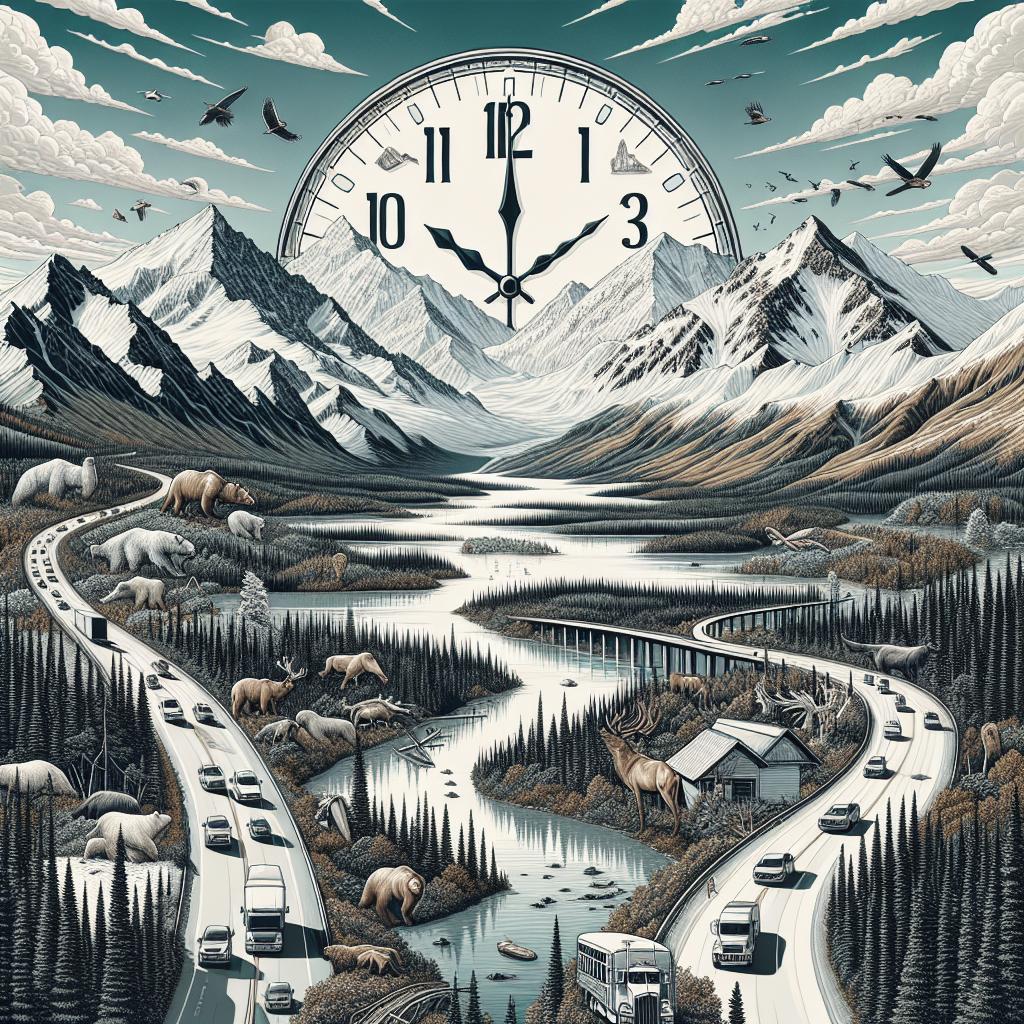
Driving across Alaska is an adventure that promises awe-inspiring landscapes, a brush with pristine nature, and a sense of accomplishment unlike any other. However, such a journey raises questions about the feasibility, safety, and optimal conditions for the endeavor. This guide will cover everything you need to know about driving to and across Alaska—from potential routes starting in Washington State, Montana, and East Coast states via Canada, to the practicality of taking ferries. We’ll also discuss safety considerations, the best times of the year to undertake this trip, and how long it typically takes. Additionally, we’ll highlight significant attractions you can visit en route and within Alaska itself, enhancing your travel experience.
Can you drive all the way to Alaska from the United States?
You can drive to Alaska from Washington State
Driving to Alaska from Washington State is one of the most popular options due to its proximity and established routes. Travelers typically start from cities like Seattle and traverse north through British Columbia and Yukon Territory before arriving in Alaska. The most common route involves taking the I-5 North to the BC-97, passing through scenic areas such as the Fraser Valley and Rocky Mountains. The total distance from Seattle to Anchorage is roughly 2,260 miles, taking around 40 to 50 hours of driving time. However, this estimate can vary depending on road conditions, border wait times, and the need for rest stops.
You can drive to Alaska from Montana
Montana serves as another gateway to Alaska, particularly for those coming from the Midwest or Southern parts of the United States. The journey usually starts in cities like Billings or Missoula and involves driving through Alberta and British Columbia before reaching Alaska. From Billings, the route generally includes the I-90 West to the I-15 North, transitioning to the BC-2 and BC-97. Covering a distance of about 2,500 miles, drivers should prepare for a 45 to 55-hour trip, punctuated by stops to enjoy the Canadian Rockies and vast wilderness areas.
How to drive to Alaska from East Coast states through Canada
Driving to Alaska from East Coast states like New York, Massachusetts, or Florida requires navigating a longer and more complex route. Travelers must first head towards Midwest states, then continue through Canada. A common approach is to drive towards Chicago, then north to cross the border into Ontario and continue through Manitoba, Saskatchewan, Alberta, and British Columbia. Depending on your starting point, this route can range from 4,000 to 5,500 miles. Allowing for significant stops, attractions, and border crossings, expect the journey to take upwards of 80 hours of driving time.
You can take the ferry to Alaska without driving through Canada
An alternative to driving through Canada is to utilize the Alaska Marine Highway System, a network of ferries that connect various ports in Washington, British Columbia, and Alaska. Starting from Bellingham, Washington, you can board a ferry that takes you through the Inside Passage, with the option to disembark at various Alaskan ports such as Ketchikan, Juneau, and Haines. Taking the ferry can be shorter and more convenient for those wishing to avoid the lengthy drive through Canada, although it may still take a couple of days depending on your final destination within Alaska.
Is it safe or dangerous to drive to Alaska?
Plan your route carefully to avoid difficult road conditions when driving to Alaska
Safety is a paramount concern when driving to Alaska due to the remote and sometimes treacherous nature of the roads. Planning your route meticulously can mitigate risks significantly. Use reliable GPS services, but also have physical maps as backups. Bond with local knowledge by checking weather forecasts and road conditions updated by state and provincial transportation departments. Equip your vehicle with necessary supplies like spare tires, first aid kits, and extra fuel. Cellphone reception can be spotty in remote areas, so carrying a satellite phone is advisable. Inform friends and family about your route and estimated arrival times for added safety.
When is the best time of year to drive to Alaska?
It can be difficult to drive to Alaska in the winter
Winter driving to Alaska poses numerous challenges, including snow-covered roads, reduced daylight hours, and extreme cold. Roads like the Alcan Highway (Alaska Highway) can become icy, making driving hazardous. Vehicle preparation is crucial in winter, necessitating winter tires, anti-freeze fluids, and robust heating systems. Moreover, emergency services can be limited or delayed due to adverse conditions, so planning for potential road closures or extended travel time is crucial. Only confident and experienced winter drivers should consider this journey during these months.
It is easiest to drive to Alaska in the summer
Summer is the ideal time to drive to Alaska due to mild weather, long daylight hours, and well-maintained roads. During this period, tourist services along the route are fully operational, providing convenient stops for rest, fuel, and dining. Wildlife sightings are more frequent in the summer, including moose, bears, and eagles, enhancing the appeal of the drive. However, summer is also peak tourist season, so plan accommodation and ferry bookings in advance to avoid last-minute hassles.
How long does it take to reach Alaska?
The time it takes to reach Alaska varies based on the starting point within the United States, the chosen route, and driving conditions. From Washington State, the journey to Anchorage typically takes about 40 to 50 hours of driving. If starting from Montana, expect approximately 45 to 55 hours. For East Coast travellers, the drive can extend to upwards of 80 hours, given the longer distance and requisite border crossings. Utilizing ferries can reduce driving time but adds travel time spent aboard the vessel, which can range from one to several days.
Important things to know about driving to Alaska
Driving to Alaska is an extensive and challenging journey, requiring thorough preparation. Essential documents such as passports for border crossings and valid driver’s licenses must be in order. Familiarize yourself with Canadian driving laws, as they can differ from those in the U.S. Fuel availability is another key consideration. Remote areas might have limited gas stations, often spaced hundreds of miles apart. Carrying extra fuel can therefore be a lifesaver. Additionally, prepare for vehicle maintenance on the go; knowing basic car repair can alleviate potential issues.
Things to see on a drive to Alaska
Things to see on the way to Alaska
The journey to Alaska offers no shortage of breathtaking sights and attractions. Driving through British Columbia, the Fraser Valley’s lush landscapes and the rugged terrain of the Rocky Mountains are must-sees. The Liard River Hot Springs in British Columbia provide a relaxing pit stop with natural thermal pools. In the Yukon, the town of Whitehorse and its surrounding wilderness offer unique cultural and natural attractions, including the Yukon Wildlife Preserve and Miles Canyon. The historic Gold Rush town of Dawson Creek, the starting point of the Alaska Highway, offers a peek into Canada’s frontier past.
Things to see in Alaska
Once in Alaska, the plethora of natural wonders and attractions only expands. Anchorage serves as an excellent base for exploring the state, offering urban amenities alongside nearby outdoor pursuits. Denali National Park, home to North America’s highest peak, offers wildlife viewing, hiking, and breathtaking vistas. The Kenai Peninsula promises marine attractions, including whale watching and glacier tours. Make your way to Fairbanks for a chance to witness the Northern Lights, particularly vivid during the winter months. And don’t miss the scenic Seward Highway and the fishing hotspot of Homer.
| Topic | Details |
|---|---|
| Driving Routes | Various start points include Washington State, Montana, and East Coast states via Canada |
| Safety | Careful route planning and vehicle preparation are crucial |
| Optimal Driving Seasons | Easiest in summer, challenging in winter |
| Travel Time | 40 to 50 hours from Washington, 45 to 55 hours from Montana, 80+ hours from East Coast |
| Preparation | Essential documents, fuel, and vehicle maintenance knowledge |
| Sights | Key attractions along the routes in BC, Yukon, and within Alaska itself |

